
Choosing the right server setup is a critical part of building a reliable and scalable IT environment. The decision isn’t just about hardware, it affects performance, security, compliance, and business continuity. Below are key considerations when deciding what type of servers you need when setting up a business in the Dubai International Financial Centre (DIFC) or the Abu Dhabi Global Market (ADGM)
Before choosing an approach, it helps to define what type of data you handle (for example, client data, financial records, or personal data) and whether there are any regulatory, contractual, or audit expectations around where it is stored and how it is protected.
On-Premises vs. Cloud (or Both?)
One of the first questions to address is where your servers should be hosted.
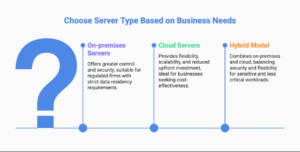
- On-premises servers offer greater control over data, access, and security. These are often preferred by regulated firms that must meet strict data residency or audit requirements. On-premises also requires the right environment in your office, including secure physical access, power protection (UPS), and adequate cooling.
- Cloud servers – such as Microsoft Azure, AWS, or Google Cloud can provide flexibility, scalability, and reduced upfront investment. It’s also important to remember the shared responsibility model: the cloud provider secures the underlying infrastructure, while your business is responsible for how systems are configured and used, including user access, data protection, and ongoing security controls. When correctly configured, cloud platforms can also meet DIFC and ADGM compliance requirements.
- A hybrid model is common in both free zones, keeping sensitive or regulated data on-premises, whilst hosting less critical workloads in the cloud.
A quick way to compare options is to look at:
- Cost: on-premises typically involves higher upfront spend (hardware, licensing, setup) plus ongoing maintenance, power, cooling, and IT time, while cloud is usually a recurring operational cost that can be easier to scale and forecast.
- Reliability: cloud platforms can offer built-in redundancy and service-level commitments, but your uptime still depends on correct architecture and connectivity, especially from the office.
- Compliance: if you have strict audit or data residency expectations, you may need specific configurations (and sometimes specific regions), or a hybrid approach for sensitive workloads.
The right approach depends on your regulator, industry, and the type of data your business is handling. In some cases, if most systems are SaaS-based (for example, Microsoft 365 and cloud business applications), you may not need on-premises servers at all.
Server Types and Specifications
Businesses in DIFC and ADGM typically require a combination of server types, such as:
- Application servers supporting core business systems
- Database servers storing operational or client data
- File servers for internal documents and records
- Backup servers supporting disaster recovery and compliance
Each server must be sized appropriately based on:
- CPU and memory requirements
- Storage capacity and performance
- Network throughput and redundancy
Correct sizing is particularly important for regulated firms, where performance issues or outages can quickly become compliance risks.
Virtualization and Containerization
Virtualization can reduce hardware costs and make your environment easier to scale and recover. Solutions such as VMware or Hyper-V allow you to run multiple workloads on fewer physical servers, and allocate resources as demand changes.
For modern application stacks, container solutions like Docker and Kubernetes can improve portability and speed up deployments, especially when you need to add or remove resources as your business grows. The right choice depends on your applications, in-house capability, and how frequently you expect your infrastructure to change.
Server Security and Redundancy
Server security is a regulatory expectation in both DIFC and ADGM, not just a technical best practice.
Key considerations include:
- RAID configurations to protect against disk failure
- Failover clusters to maintain availability during hardware or system outages
- Regular patching and firmware updates to address vulnerabilities
- Strong access controls, monitoring, and logging to support audits
- MFA for administrator access and encryption for sensitive data (at rest and in transit) to reduce the risk of unauthorised access
A well-designed server environment helps meet data protection laws, cybersecurity expectations, and regulatory scrutiny, whilst minimising downtime.
Further considerations
Considering your business plan for the points below can help shape a server strategy early, ensuring compliance, resilience, and scalability.
- Do you have the in-house expertise to manage and secure on-premises servers?
- Are you required by law, your regulator, or industry standards to keep certain data stored locally?
- What are your uptime, continuity, and disaster recovery requirements and expectations (for example, RTO/RPO targets or an SLA)?
- Are your backups designed to support recovery (for example, having an immutable/offline copy and regularly testing restore procedures)?
Key Takeaways
The right server approach in DIFC and ADGM usually comes down to three things: the sensitivity of your data, the level of uptime your business requires, and whether you have the resources to manage infrastructure in-house.
Cloud and hybrid setups can support compliance when they are properly designed and governed, while on-premises environments can offer stronger control when you need it, but require the right physical setup and ongoing maintenance.
Whatever model you choose, focus on sizing correctly, building in resilience, and treating security and disaster recovery as core requirements, not add-ons.
Kew Solutions: Server Setup, Management, and Support
At Kew Solutions, we help businesses in DIFC and ADGM plan, deploy, and manage server environments that are secure, compliant, and scalable.
If you’d like help choosing the right setup for your business, Kew Solutions can run a short infrastructure assessment and recommend the most practical option (on-premises, cloud, or hybrid) based on your data, compliance needs, and growth plans. Learn more about our client & server infrastructure services.