Projects / 14 November 2026
Starlink as a business internet backup in Dubai
Starlink installation and backup internet for Dubai businesses: when it adds path diversity, what can still fail, and how Kew plans and tests failover.
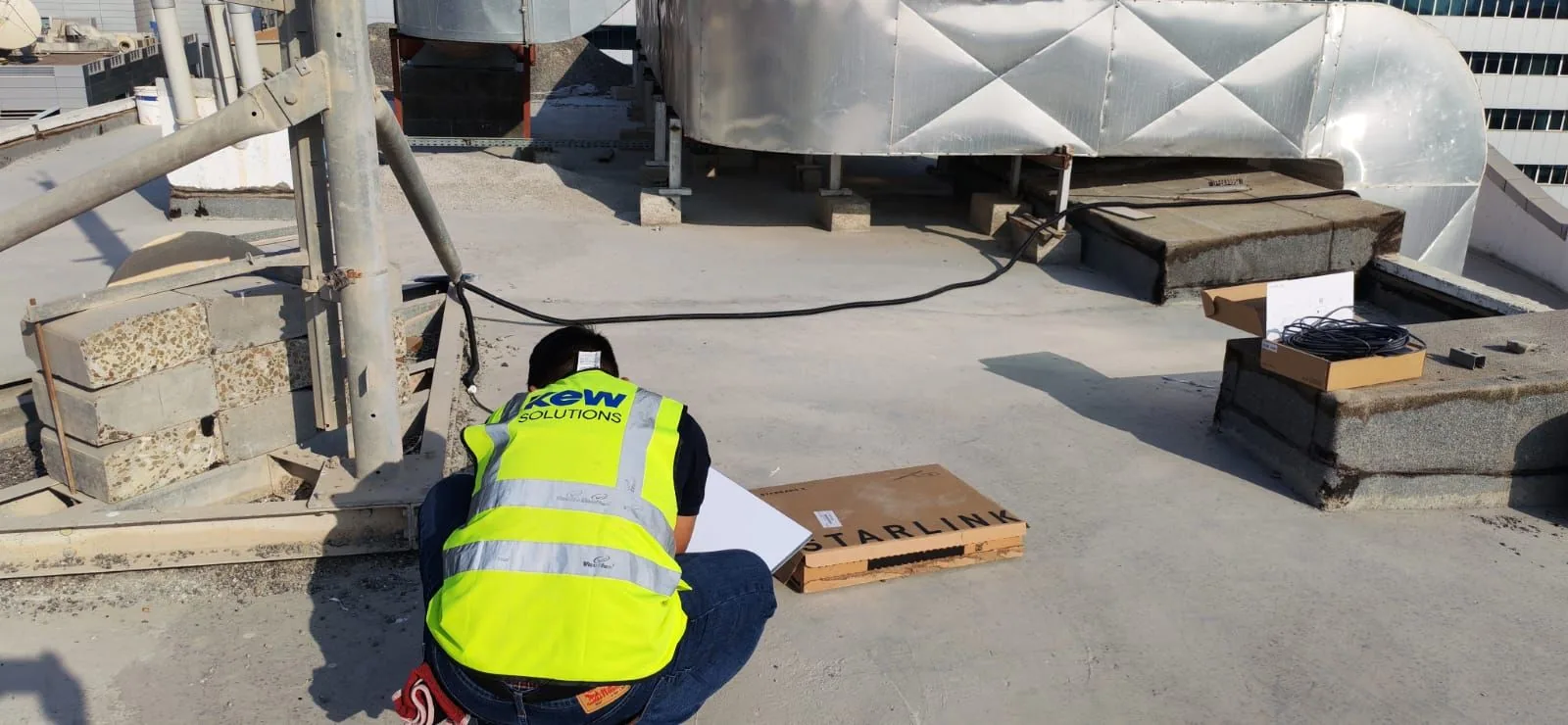
An internet outage can stop cloud applications, card payments, calls and the systems a team needs to serve customers. A second connection can help, but only if it is available when the first one fails. For some businesses, a satellite connection such as Starlink offers a different route into the internet. For others, it may not be the right fit.
The useful question is not simply whether a business has two connections. It is whether those connections, and the equipment between them and the people using them, can fail independently.
Why one connection can stop the business
Fibre, fixed wireless and mobile broadband all have different strengths, but each service can be interrupted. A fibre cable can be damaged, a building riser can be affected by construction, a provider can have a local fault, or equipment at the office can fail. A business that depends on one internet path may lose access to cloud software, voice services, remote support and customer-facing systems at the same time.
The impact depends on what the business does online and how long it can operate without a connection. A branch office may be able to continue with limited service; a clinic, hotel or retail site may need payment and communications systems available throughout the day. Start by identifying the services that matter and the maximum disruption the business can accept.
Two connections are not automatically resilient
Two internet subscriptions do not necessarily mean two independent routes. Different provider names can still rely on the same cable duct, building entry point, exchange, wholesale carrier or local infrastructure. A fault in any shared part may affect both services.
There can also be shared dependencies inside the premises. Both connections may terminate on one router or firewall, rely on one power supply, or reach staff through the same switch and wireless access points. If that common equipment loses power or fails, having two internet providers will not keep the office online.
Finally, a backup link that has never been tested may not take over as expected. Failover can depend on router configuration, health checks, routing rules, DNS, VPN setup and how applications handle a change of public address. Some active calls or sessions may drop even when new connections start using the backup path. Automatic failover reduces manual work, but it does not guarantee a seamless transition.
When providers can confirm route diversity, ask them to explain where their services share infrastructure. Then map the entire path from the provider network to the applications and devices that staff use.
Where Starlink can fit
Starlink uses a satellite link between a site terminal and its network, rather than a local fibre cable as the last connection to the premises. That can make it a useful alternative path where a business wants to reduce dependence on its terrestrial internet connection, or where fixed infrastructure is unavailable, delayed or unsuitable.
It is not automatically independent end to end. The terminal still needs power and a clear view of the sky. The indoor network, router, firewall and business applications still need to work. Satellite service also has its own network, equipment, plan conditions and operating characteristics to consider. A roof position that looks open from the ground may be affected by nearby buildings, plant, parapets or future work.
On 28 August 2026, the UAE's Telecommunications and Digital Government Regulatory Authority announced a licence for Starlink satellite internet services in the country. The announcement says services remain subject to the UAE's regulatory and technical frameworks. Availability and conditions can vary, so confirm the current service, plan and installation requirements for the exact address before designing around it. Read the TDRA announcement.
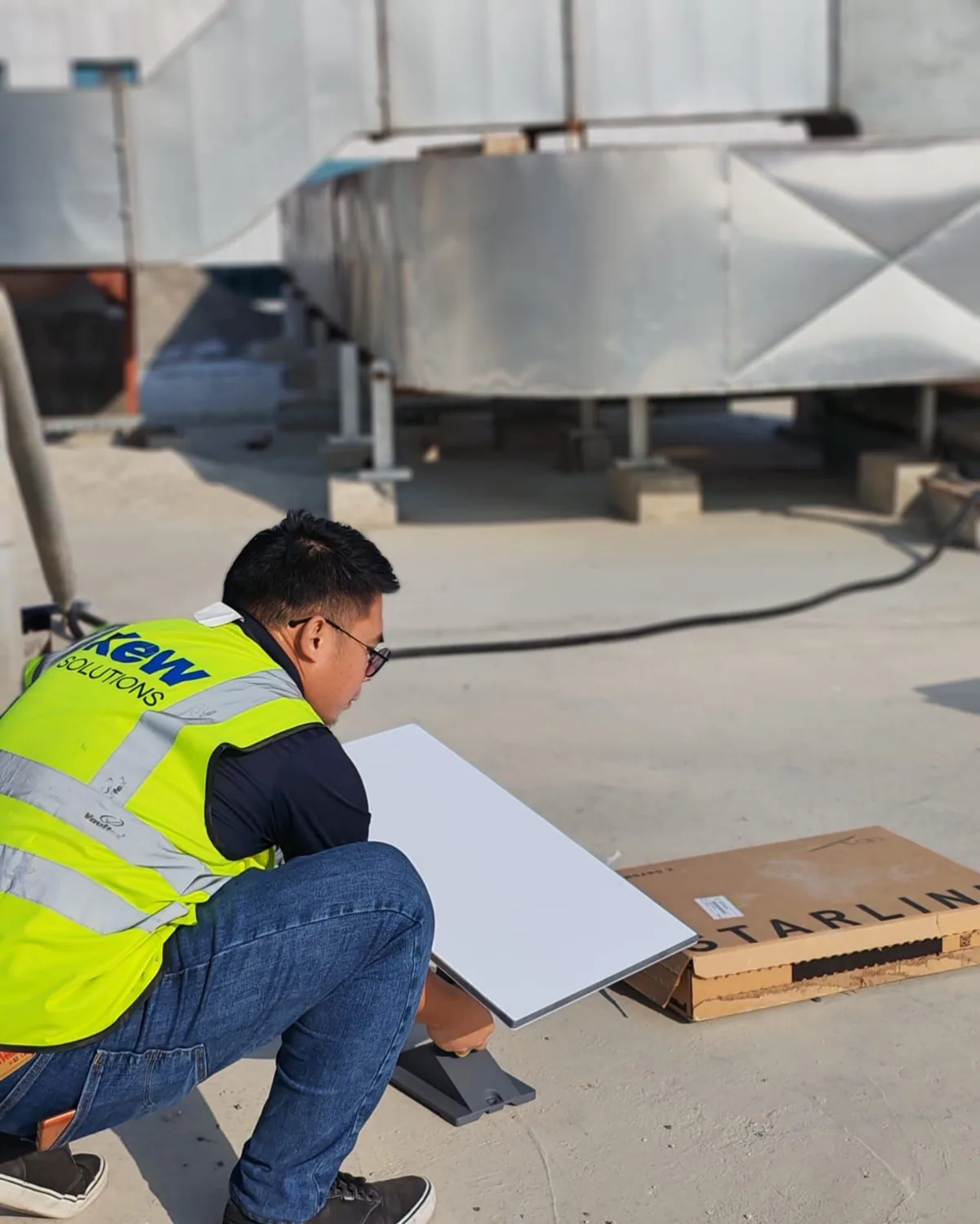
A site survey checks the mounting position, visibility of the sky, cable route and safe access for future maintenance.
Starlink may be considered as a primary connection at a site where the available service meets the business's needs. It may also be considered as a backup to fibre, fixed wireless or mobile broadband. The right role depends on the location, service plan, applications, operating hours and how the business will support the equipment.
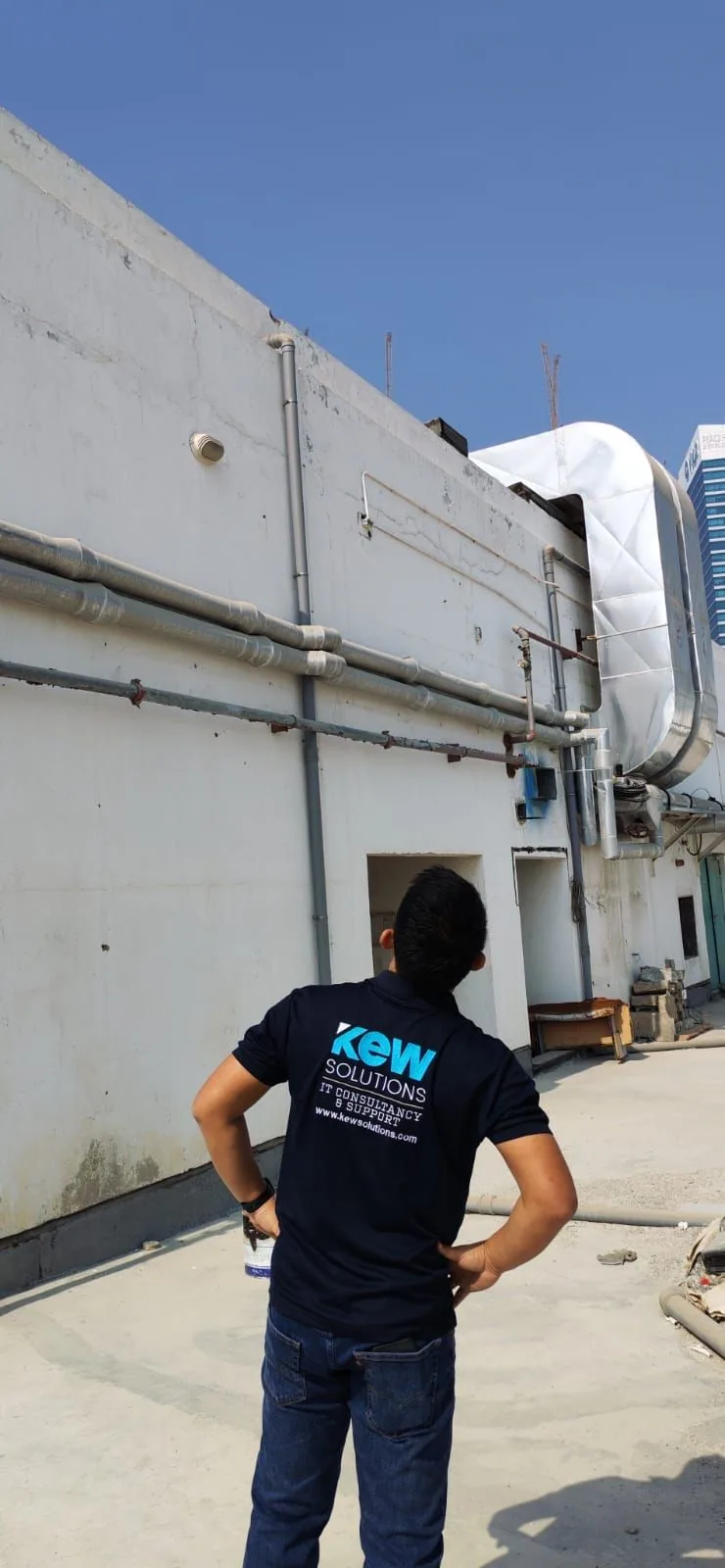
The terminal position and indoor network handoff should be reviewed together before installation.
What a satellite backup does not fix
Adding a satellite connection addresses one part of the design: the route between the premises and the internet. It does not protect every dependency. If the site loses power, the terminal, router and access points need suitable backup power. If the firewall fails, both internet connections may be unusable. If a cloud platform or a business's own system is down, changing internet providers will not restore that service.
There are also application-specific questions. Voice and video calls, remote access, payment terminals and VPNs may react differently to a connection change. Public IP address requirements, inbound connections, traffic limits, performance at busy times and support terms should be checked against the chosen plan rather than assumed.
Resilience is a system design, not a device purchase. A satellite terminal can add value, but only when its role and dependencies are understood.
How Kew approaches a resilient installation
1. Map the existing connection. We identify the current provider, how the service enters the building, the route to the router or firewall, the power dependencies and the applications the business needs to keep using. Where possible, we check whether a second terrestrial provider shares infrastructure with the first.
2. Survey the site. For a rooftop satellite terminal, we assess sky visibility, mounting, cable routing, equipment location, safe access and power. The indoor handoff also needs to reach the network equipment that will manage both connections.
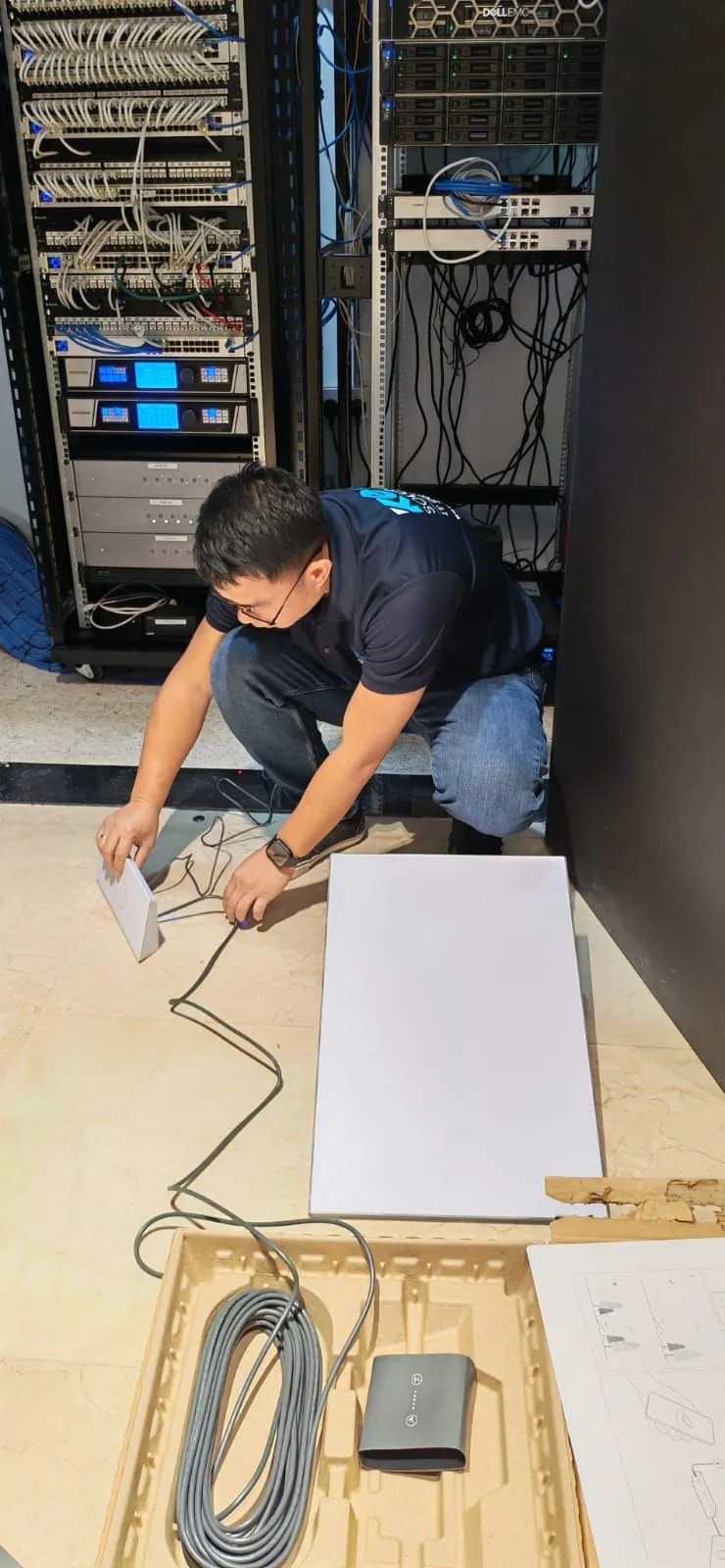
The indoor equipment and network handoff matter as much as the terminal on the roof.
3. Design how traffic will move. A suitable router or firewall can monitor the primary link and direct traffic to a secondary connection when the primary becomes unavailable. The design should define what triggers failover, which services use the backup, how traffic returns to the primary and what users should expect during a transition.
4. Test the failure and recovery paths. We test more than whether the satellite connection can browse the web. A planned test checks that the primary link is detected as unavailable, important services can use the backup, staff know what to expect, and service returns correctly when the primary is restored. The test should include the systems the business relies on, such as VPN, voice, payment or cloud applications where relevant.
5. Document and support it. The handover should record the equipment, connection paths, failover behaviour and test results. Ongoing support can then include checking the health of both links and repeating tests when the network or business changes.
Is Starlink right for every Dubai business?
No. The building may not have a suitable rooftop position, the service may not meet the application's requirements, or another diverse terrestrial connection may be a better option. Some businesses need a documented recovery objective or a provider service commitment that must be checked against the actual plan and agreement. Others may only need an alternative connection for a branch, temporary site or selected business systems.
Before choosing, ask:
- Do the two services enter the building by different physical routes?
- What equipment, power and network components do they still share?
- Which business services must keep working during an outage?
- How will failover and failback be triggered and tested?
- Does the selected plan meet the site's availability, performance and support needs?
These questions help distinguish a second subscription from a tested continuity plan.
Plan your backup connectivity
Kew can review the existing internet path, assess whether satellite connectivity is suitable for the site, and plan the network handoff and failover test. Explore our network, firewall and Wi-Fi services or ask Kew about business connectivity.
Ask Kew
Questions about what you've just read? Ask Kew.
Not ready to change IT provider or start a project? Ask us anyway.
A quick technology question, advice on something you are planning, or a second opinion on your current setup. Free, no obligation, answered by a person.

Replies personally, usually within one working day.
Keep reading
Related insights
Data cabling in Dubai: why the hidden work matters
Why data cabling in Dubai matters: plan routes, label links, test performance and document the network so faults are easier to trace.
Read moreSIRA VideoGuard and eGuard: what it is and why your CCTV needs one
What the SIRA VideoGuard (eGuard) device does, which premises need one, the certificates involved, and when a VMS is required under Dubai's CCTV rules.
Read moreWhat Kind of Servers Do I Need for an Office Setup?
Learn how to choose between on-premises, cloud, and hybrid servers while meeting UAE regulatory and data residency standards for you office setup.
Read more