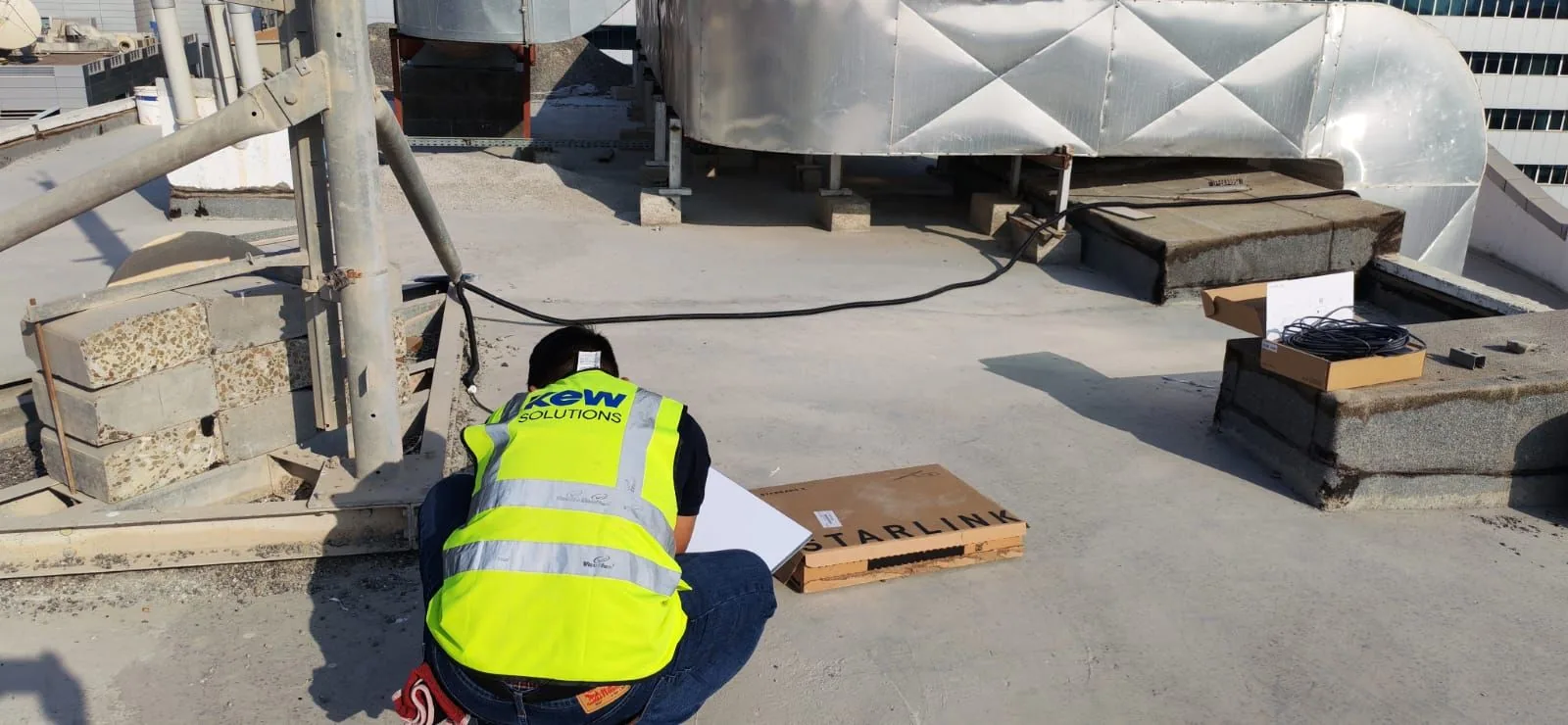
Projects / 14 November 2026
Data cabling in Dubai: why the hidden work matters
Why data cabling in Dubai matters: plan routes, label links, test performance and document the network so faults are easier to trace.
Some people see cables and cabinets. The people who have to run a business see the physical network that connects staff, phones, Wi-Fi, cameras, meeting rooms and the systems they depend on.
Structured cabling is rarely the most visible part of a fit-out. Much of it disappears into ceilings, walls, floors and cabinets. But when it is planned, installed and recorded properly, the network is easier to operate, maintain and change. When it is rushed, every future fault can become a search for an unknown cable.
The network starts before the first cable is pulled
The first decision is not which cable to buy. It is what the business needs the network to connect, where devices will be placed and how the site may change. Workstations, wireless access points, printers, cameras, access control, phones and meeting-room equipment each need the right outlet, route and capacity.
That information should be gathered while the floor plan and fit-out can still change. It informs the number and location of outlets, the position and size of communications cabinets, the cable pathways, and how much spare capacity to leave for future additions. It also helps the project team coordinate with electrical, mechanical and ceiling trades before routes are closed in.
Copper and fibre have different roles. The right choice depends on the route, distance, required performance, equipment and the project specification. A design should make those decisions deliberately rather than rely on whatever cable is easiest to install on the day.
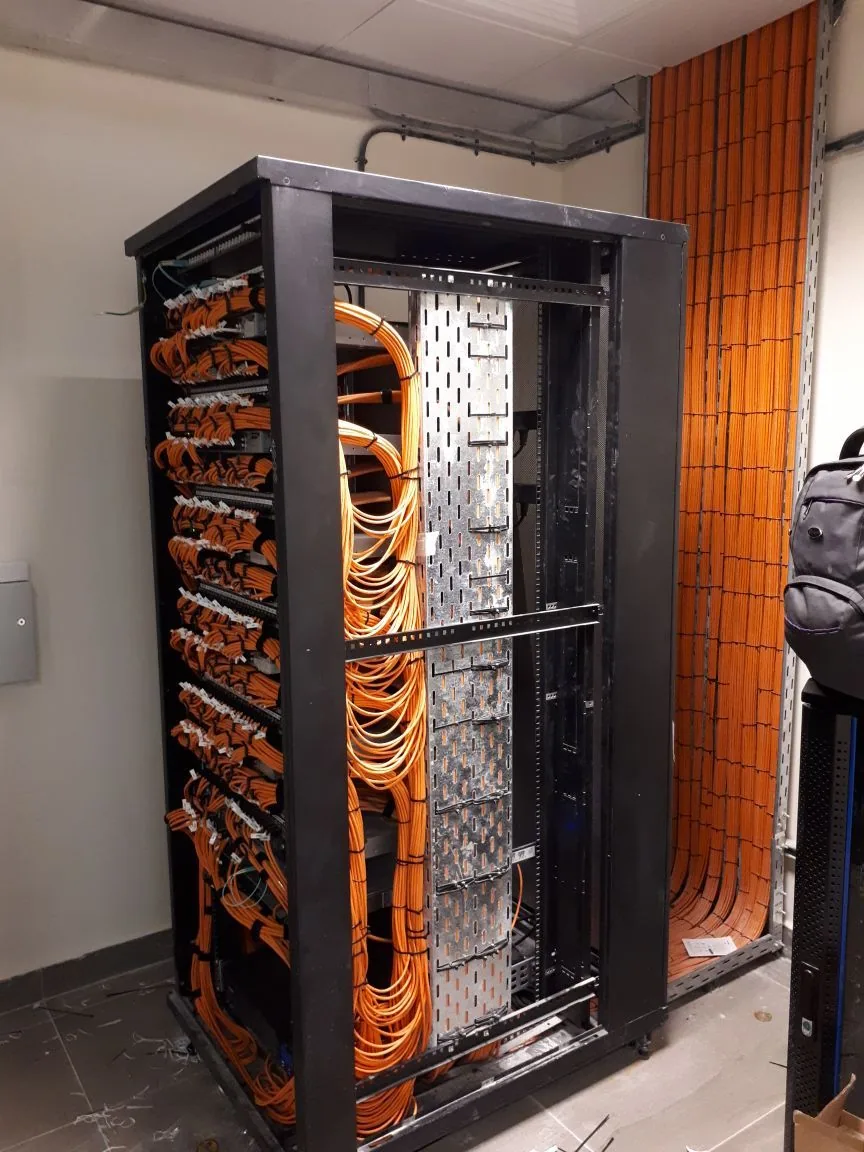
A cabinet is easier to work in when cable routes and patching are planned together.
Neat installation is about protection and access
Good cabling is not just tidy for a photograph. A cable route has to protect the cable and remain accessible to the people who will maintain it. Tight bends, crushing, sharp edges, excessive pulling force, unsupported runs and overfilled pathways can damage cables or make later changes difficult. Routes should follow the cable manufacturer's installation guidance and the agreed project design.
Power and data routes, penetrations through walls and floors, fire stopping, and access above ceilings need coordination with the other trades and the building's approved requirements. Leaving these details until after installation can mean rework, inaccessible connections or a route that no longer matches the drawings.
The rack matters too. Patch panels, switches, power and cable management need room to be identified and serviced. Extra slack should be controlled, not left as a bundle that blocks equipment or hides labels. The goal is a system that another engineer can understand without having to dismantle it.
Labels turn a bundle into a usable network
Each permanent link should have an identifier that can be followed from the outlet to the patch panel and into the project records. The label at each end needs to match the same schedule or drawing. The exact naming convention should be agreed with the client and consultant before installation, then applied consistently.
Colour can help distinguish groups, but it is not a substitute for an identifier. A coloured cable still needs a label that tells an engineer where it starts, where it ends and which record describes it.
Administration standards such as ANSI/TIA-606 cover identification and records for telecommunications infrastructure. The point is practical: when a user reports a fault, a technician should be able to trace the relevant link from the desk or device to the cabinet without guessing.
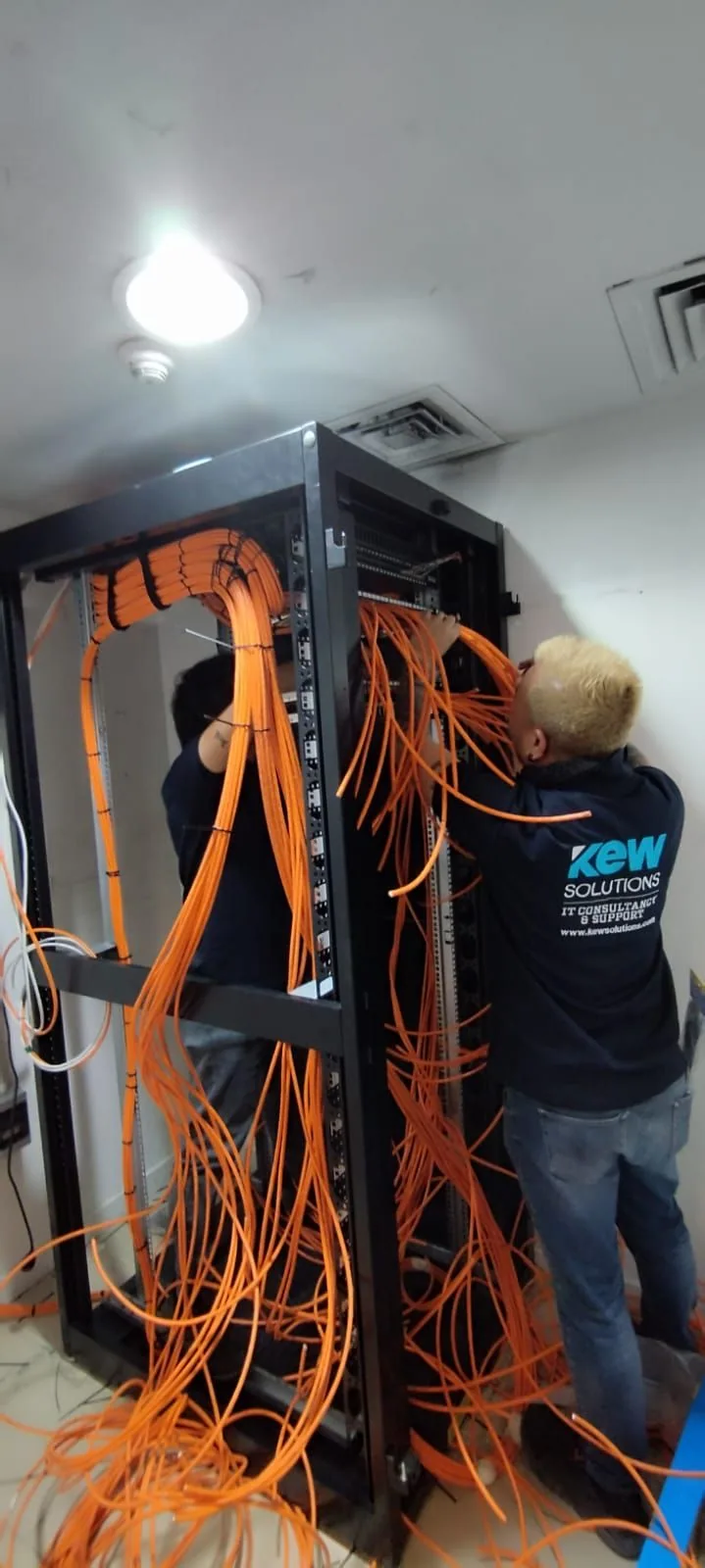
Kew's team carries out the installation work as well as planning what sits behind the finished room.
A link light is not a test report
Testing is where an installed network is checked against the requirements set for it. A basic wire-map test can identify some connection faults, such as an open circuit or an incorrectly connected pair. But a cable showing continuity does not by itself prove that it meets the performance requirements of its specified category or class.
For copper cabling, the project should state the link type and the test limit to use. Where certification is required, a suitable field tester measures the relevant performance parameters against that limit. For fibre, the test plan should define the checks and loss measurements required for the installed link. Results should be saved against the same identifiers used on the labels and drawings.
ANSI/TIA-568 covers requirements for customer-premises cabling systems, including topology, performance, installation and components. The applicable standard, edition and test scope should be agreed in the project specification. Fluke Networks explains the difference between verification, qualification and certification testing.
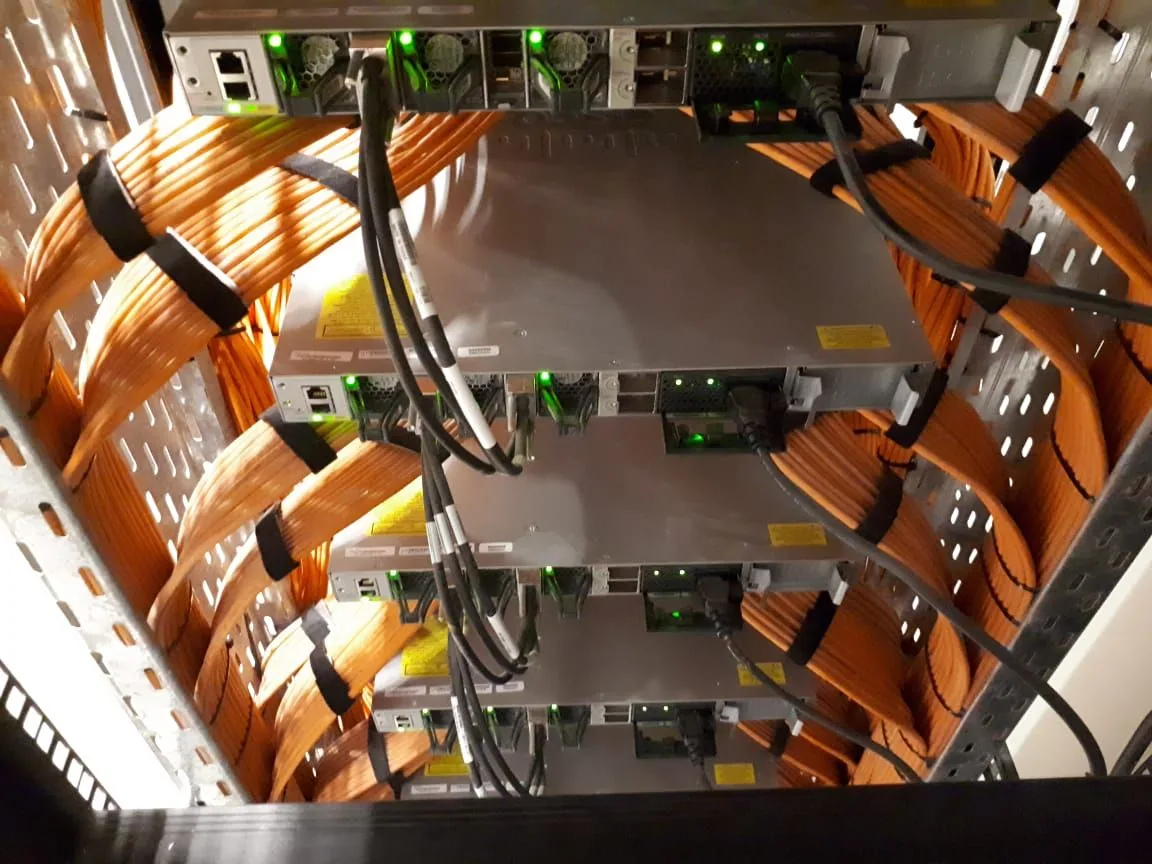
A finished rack should make the route from patch panel to equipment clear and serviceable.
Documentation is part of the installation
The handover should let the client's team answer ordinary questions later: which port serves this room, which switch port is it patched to, what test result belongs to this cable, and which drawing shows its route?
A useful close-out pack can include the outlet and cable schedule, patch-panel and rack information, as-built drawings, test results, and product details. The exact deliverables depend on the project, but they should be agreed before work begins. Records should be updated when links are added, moved or removed.
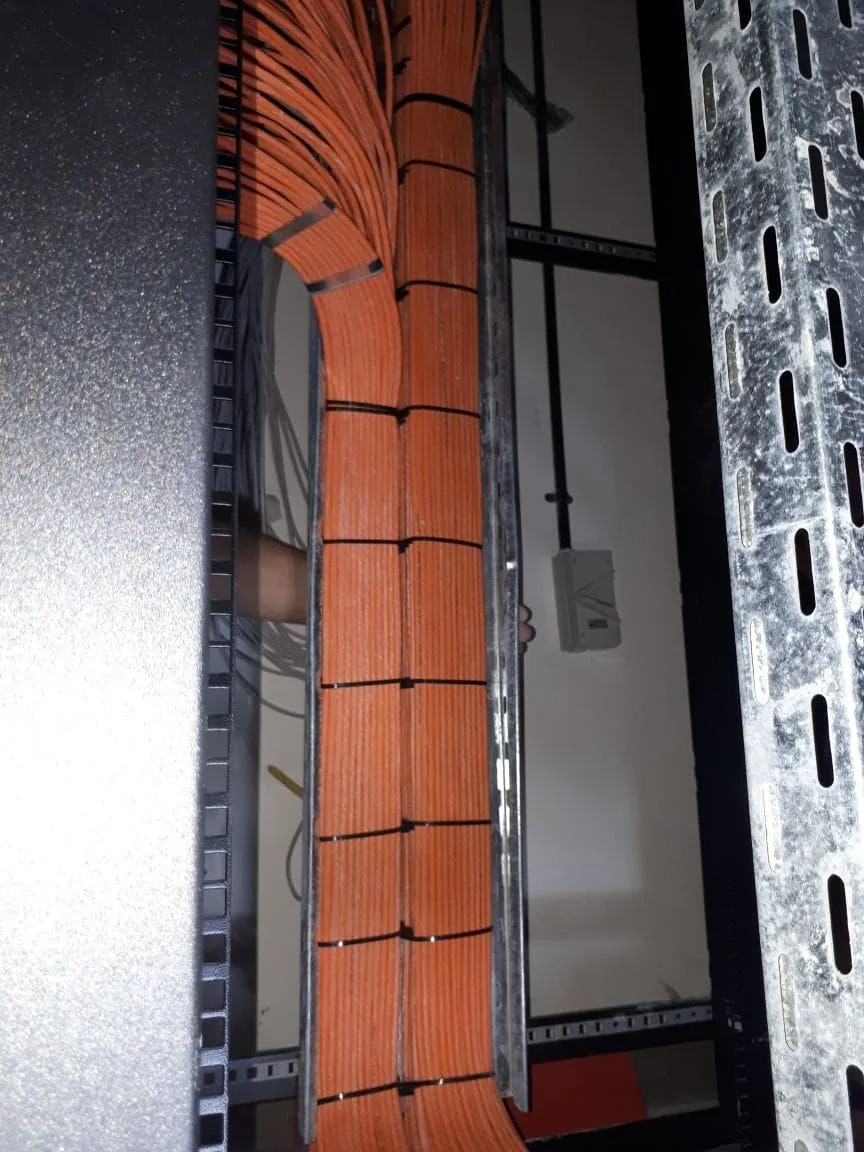
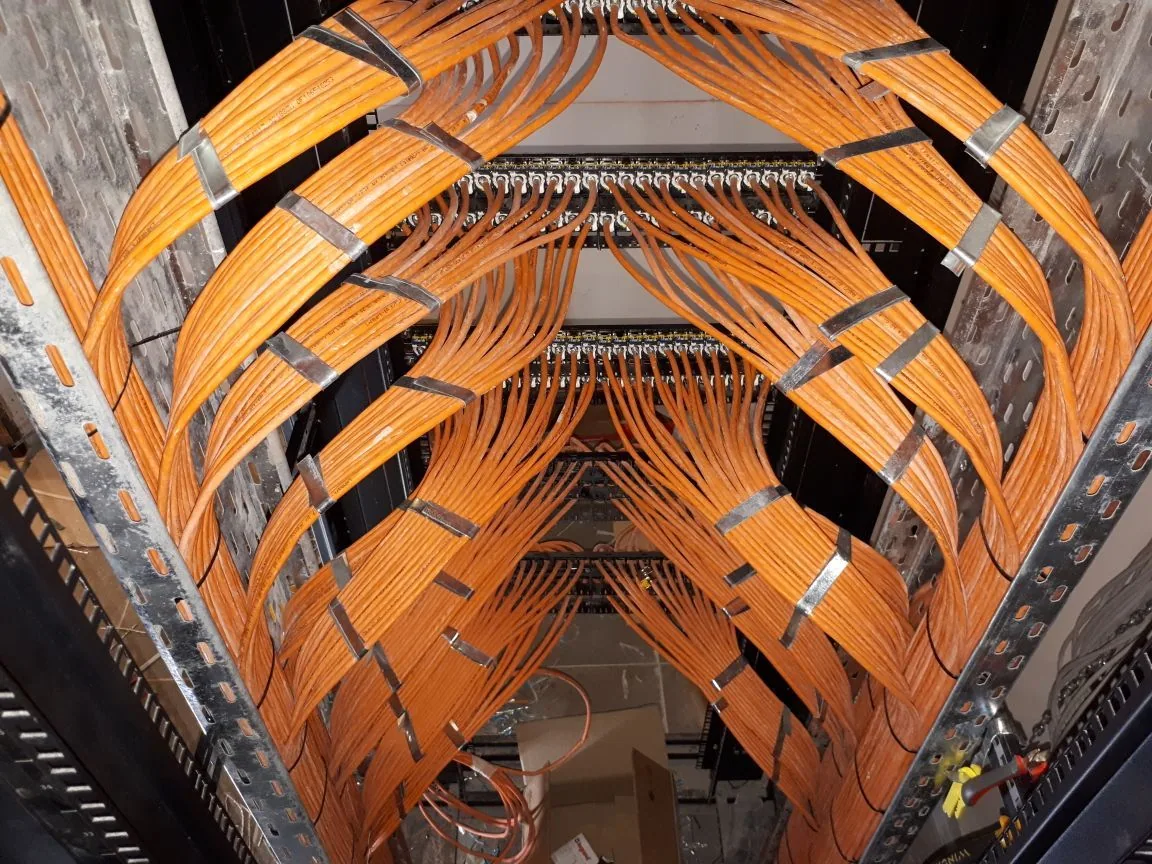
Routes inside risers and ceilings are easy to forget once the building is finished, which makes records and identifiers important.
The value becomes clear when something goes wrong. If a room loses its connection, a clear label and test record can narrow the search to one link or port. Without them, an engineer may have to trace cables physically, test several connections and interrupt people who are still using the network. What was saved during installation can cost more in investigation and disruption later.
What to check before a cabling project is handed over
- Do the drawings show the outlets, cabinets and agreed cable routes?
- Are both ends of every link labelled to the same schedule?
- Was each link tested against the project specification, with results retained?
- Can the client match a test result to an outlet and patch-panel port?
- Are the as-built records clear enough for another engineer to use?
- Has spare pathway and cabinet capacity been considered for planned growth?
How Kew approaches structured cabling
Kew starts with a site survey and design, then supplies and installs the cabling with routes and terminations identified. The team tests and commissions the installation against the agreed requirements, then hands over the documentation so the client can operate and maintain it.
That process is especially important when cabling shares a programme with a fit-out. Drawings, access, containment and ceiling closure dates need to be coordinated with the main contractor and other trades. The cabling may be hidden at the end, but the decisions that make it usable have to be made early.
For more on the service, see structured cabling and FTTH in Dubai. To discuss a new fit-out, an office move or a network that has become difficult to maintain, ask Kew about your cabling requirements.
Ask Kew
Questions about what you've just read? Ask Kew.
Not ready to change IT provider or start a project? Ask us anyway.
A quick technology question, advice on something you are planning, or a second opinion on your current setup. Free, no obligation, answered by a person.

Replies personally, usually within one working day.
Keep reading
Related insights
Starlink as a business internet backup in Dubai
Starlink installation and backup internet for Dubai businesses: when it adds path diversity, what can still fail, and how Kew plans and tests failover.
Read moreSIRA VideoGuard and eGuard: what it is and why your CCTV needs one
What the SIRA VideoGuard (eGuard) device does, which premises need one, the certificates involved, and when a VMS is required under Dubai's CCTV rules.
Read moreWhat Kind of Servers Do I Need for an Office Setup?
Learn how to choose between on-premises, cloud, and hybrid servers while meeting UAE regulatory and data residency standards for you office setup.
Read more